
How to Search Criminal Dockets
Search ARCourts is the free public entry point for a Dallas County criminal docket search. Have a Dallas case or citation number? Choose Cases. Working from a party name instead? Choose Participants. Open the detailed search, select Dallas County, and add a Court Location filter only if the first results sprawl too wide. Type one or two letters and the system treats it as an exact match; three or more letters allow a partial one.
Think about court level before opening any result. A Dallas felony belongs on the Circuit Court docket, while misdemeanors, ordinance violations, traffic matters, and preliminary felony events may sit in the Fordyce or Sparkman department of Dallas County District Court. District Court coverage in the statewide system is conditional. An empty result calls for a follow-up with that clerk.
- Select Cases or Participants in Search ARCourts.
- Enter the known Dallas case number or the Dallas participant name.
- Set County Name to Dallas and narrow by Court Location if needed.
- Open the matching Dallas County Case Summary, then review Offenses, Case Events, and Docket Entries.
- Ask the filing clerk for a missing document, live setting, or certified record.
Dallas County Criminal Docket Split
Jurisdiction drives everything in a Dallas County criminal docket. The Arkansas Circuit Court system gives Circuit Court general criminal jurisdiction over Dallas County felonies. District Court, in turn, handles misdemeanors, violations, traffic matters, and preliminary felony work. Dallas County sits in the Thirteenth Judicial Circuit. Its state District Court belongs to District 34. It runs through Fordyce and Sparkman departments.
| Court | Criminal docket work | Official follow-up |
|---|---|---|
| Dallas County Circuit Court | Dallas felonies and general-jurisdiction criminal cases | Dallas County Circuit Clerk |
| Fordyce District Department | Dallas misdemeanors, violations, traffic, preliminary felonies | Fordyce District clerk |
| Sparkman District Department | Dallas misdemeanors, violations, traffic, preliminary felonies | Sparkman District clerk |
One Dallas felony can leave footprints in both courts. Early District Court activity, often tied to a preliminary hearing or bond issue, may be followed by a separate Circuit Court case. The two registers are related but not interchangeable. Check the court and location in Case Summary before trusting the event history.
What a Criminal Docket Shows
The display comes in blocks, not one long sheet. Case Summary names the Dallas court, case number, filing date, type, and status. Participants lists public roles. Offenses gives count-level charge detail, Case Events holds settings, and Docket Entries form the dated register of filings and court action.
| Case number | County or city prefix, case-type prefix, two-digit filing year, and sequence. Preserve the format shown on court papers. |
|---|---|
| Offenses | Charge number, description, level or class, statute, plea, and disposition where public. |
| Case Events | Date, time, event, room, location, and judge for a scheduled, reset, cancelled, or held proceeding. |
| Docket Entries | Filing time, entry description, detail, associated name, and a public document link or “None.” |
| Outcome | Plea, disposition, judgment, and sentence may appear in different fields and at different times. |
Never guess at a case number. Pull the real one from your notice or from Case Summary. Treat the portal display as navigation, not a certified Dallas County court record.
Dallas County Criminal Docket Offenses
Read the Offenses block count by count. A single Dallas County criminal case can stack several charges. Each count carries its own statutory class, plea, and disposition. A case-level status label will not capture that detail. Start with the charge rows. Then match them against later Docket Entries for an information, indictment, amended filing, order, plea proceeding, judgment, or sentencing action.
The official explanation of case-status changes in Contexte spells out how qualifying docket, event, and disposition activity moves a status.
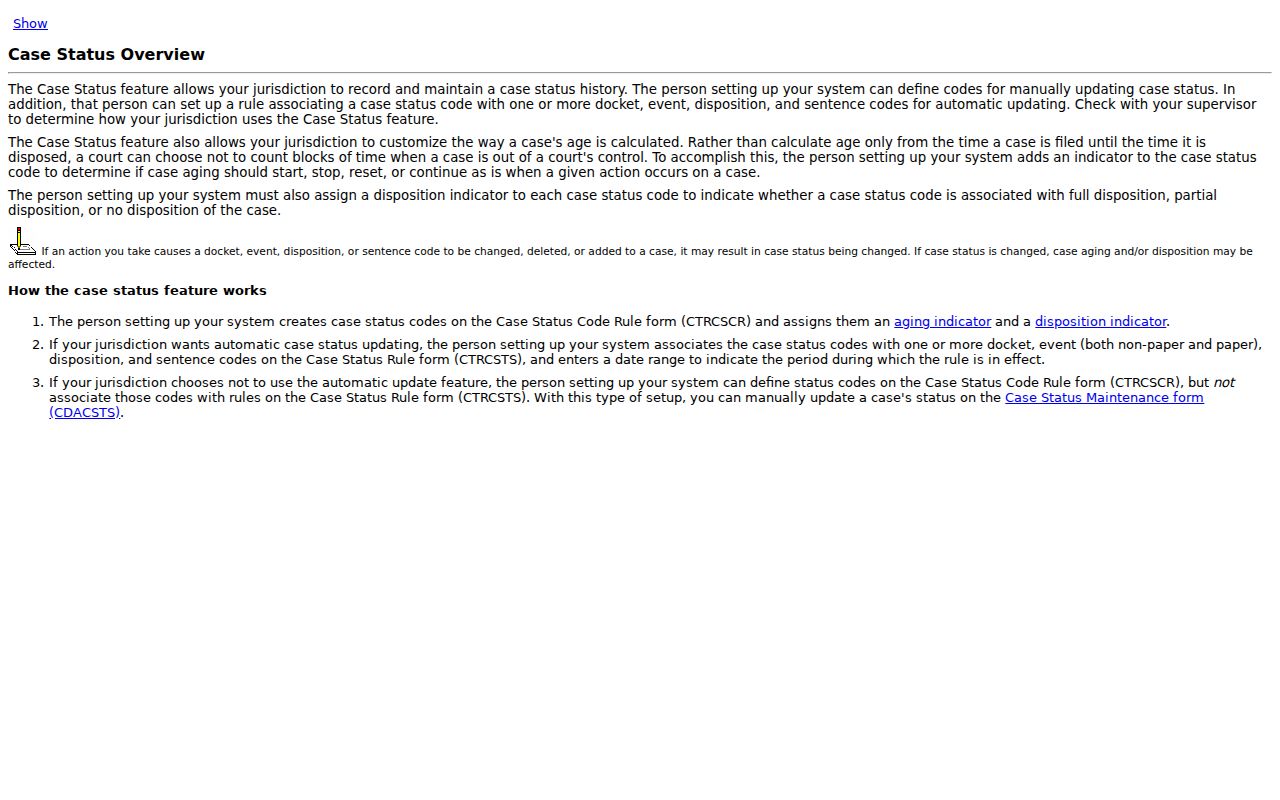
That is why a status label is only one part of the Dallas criminal record. Dated entries and offense-level outcomes supply the context. Together they show what actually changed.
Key distinction: a plea is the response to a charge, a disposition is the recorded result, and a sentence states the consequence after an applicable result.
Stages on a Criminal Docket
A Dallas County criminal docket grows as the filing court records each step. The exact path depends on the charge and the court. A felony may leave early District Court activity before any Circuit filing appears. Read the register in time order. Then check the newest Case Event. Compare it against later notices and orders for anything that has moved.
Docket flow: Filing → Arraignment → Pretrial → Plea or Trial → Disposition → Sentencing
An arraignment addresses the charge and the plea. Pretrial entries often cover discovery, motions, readiness, or possible resolution. A plea and a trial are different paths. Either can end in an outcome. Disposition and sentencing remain distinct steps. After the main result, post-judgment activity such as an appeal filing can add further entries.
Dallas County Criminal Docket Resets
A past event stays visible even after a Dallas County criminal setting moves. Search ARCourts keeps Case Events and Docket Entries separate. The event block shows date, time, room, location, judge, and status. A later entry may record the notice, order, or reason behind a continuance, reset, cancellation, or held event. Always compare the newest future event with entries filed after the old date.
The official Contexte scheduling-field documentation explains how events and status-related docket codes are stored.
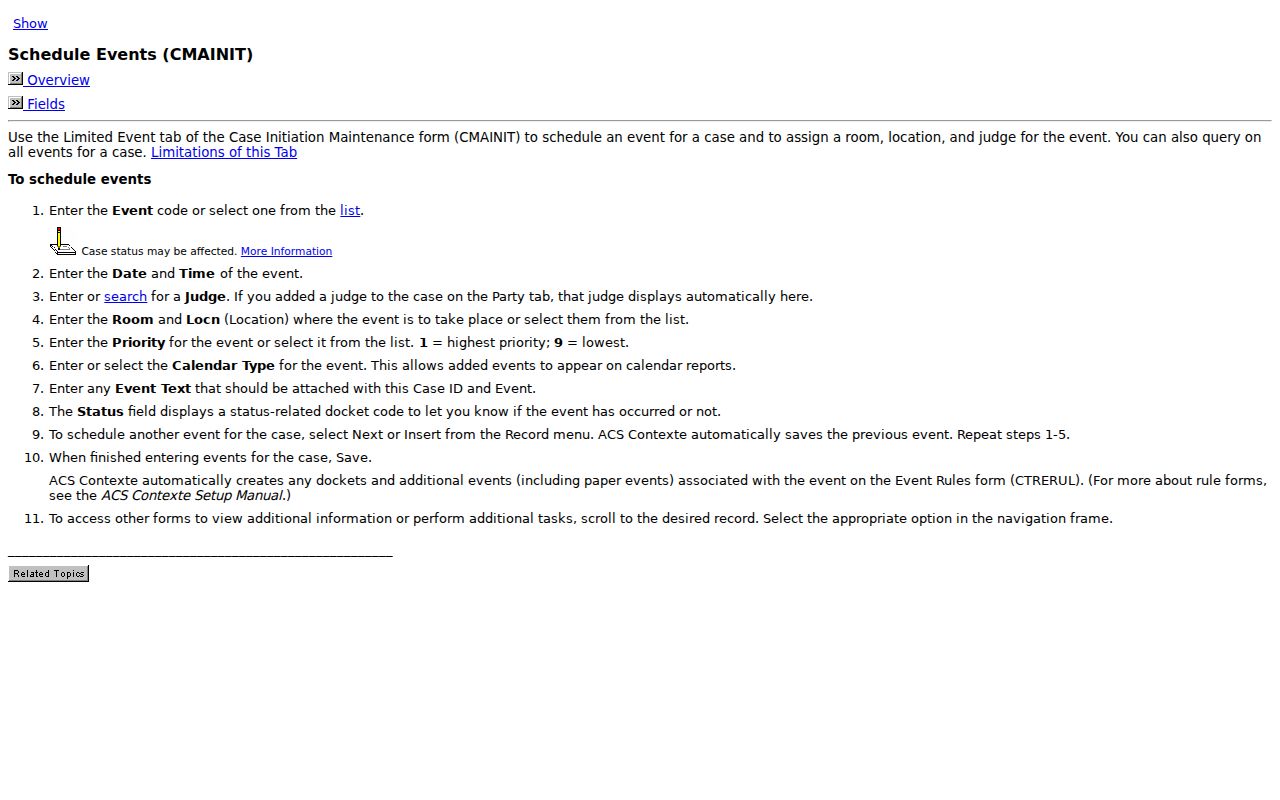
That is why no single Dallas row should be read alone. As a hearing date nears, confirm the current setting with the clerk for the court named in Case Summary.
Note: Search ARCourts is public information, not legal notice; follow filed orders and direct instructions from the court.
Which Court Holds Criminal Dockets
Dori Keeton serves as Dallas County Circuit Clerk and keeps the Circuit criminal dockets at the courthouse on Third and Oak Streets in Fordyce. Her direct line is 870-352-2307. Lower-level criminal cases split between two District clerks. In Fordyce, chief clerk Ericka Davis can be reached at 870-352-2332, and in Sparkman, chief clerk Rita Fite answers at 870-678-2255.
Dallas County Circuit Clerk
Third and Oak Streets
Fordyce, Arkansas 71742
870-352-2307
Felony and general Circuit criminal files.
Fordyce District Clerk
PO Box 672
Fordyce, Arkansas 71742
870-352-2332
Fordyce lower criminal and preliminary matters.
Sparkman District Clerk
110 East Main
Sparkman, Arkansas 71763
870-678-2255
Sparkman lower criminal matters.
Phone first. The clerk's office can tell you its copy fees, hours, and payment rules before you mail a Dallas County record request. Have the court, case number, entry date, and exact document ready when you call.
Dallas County Criminal Docket Codes
A short line on a Dallas County criminal docket may name a filing or court act without spelling out the legal basis behind it. Arkansas case management separates the entry description from the fuller docket detail. Charge codes label an offense. Docket Entries record procedural steps. Treat neither one as a complete charging instrument or judgment.
- Information or indictment
- A formal charging instrument in a criminal case.
- Case Event
- A proceeding that is scheduled, reset, cancelled, or marked held.
- Disposition
- The recorded outcome of a case or individual charge.
- Docket detail
- Clerk-entered text that adds context to an entry description.
The official short-docket-entry instructions document this distinction inside Contexte.
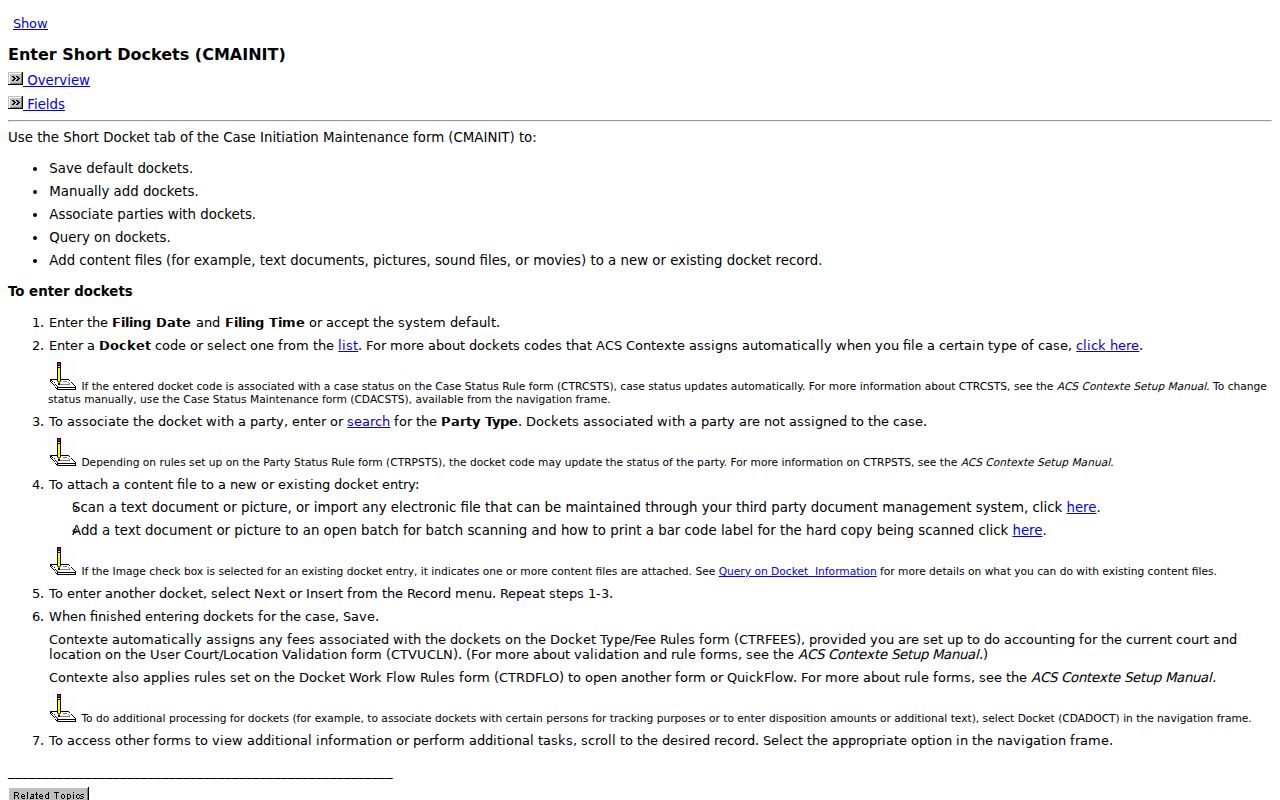
A short label on a Dallas County criminal docket rarely settles the question it raises. When it does not, pull the filed instrument itself.
Dallas County Criminal Docket Boundaries
Arkansas specialty courts can run referrals, assessments, case management, supervision, treatment progress, sanctions, phases, and closure through SCALES, the Specialty Court Application and Legal Exchange System. Access is limited to trained program teams. That makes it nothing like a public Dallas County criminal docket. No Dallas County specialty program is listed, so statewide facts about SCALES do not prove the county takes part. A participant may also have an eligible public criminal case. Search ARCourts may then show the underlying court register. Clinical and program-management data stays out of that display. A public charge or hearing setting is not a window into protected treatment material.
Dallas County Criminal Docket Copies
A document linked in the portal is convenient. It is not automatically a certified charging instrument, order, or judgment. Search ARCourts says it plainly. Its display is not the official court record. A "None" value beside an entry does not prove the clerk holds nothing, either. Contexte can point to a separate approved document-management system. Remote image access varies. For a certified copy from a Circuit criminal file, ask the Dallas County Circuit Clerk. For a District matter, call the Fordyce or Sparkman clerk. Name the case number, the filing court, the entry date, and the exact item. Say whether you want a plain or certified copy. Ask the clerk to confirm the total cost and delivery method before you send payment.
Dallas County Criminal Docket Data
The Arkansas Administrative Office of the Courts handles bulk or compiled data. It does so through its own process. That route can cover criminal or traffic data. It may require a form, an agreement, an affidavit, or other safeguards. Those fall under Administrative Order 19. One certified case record does not belong in this channel. The official AOC data-request page lays out the request routes and the limits that govern them.
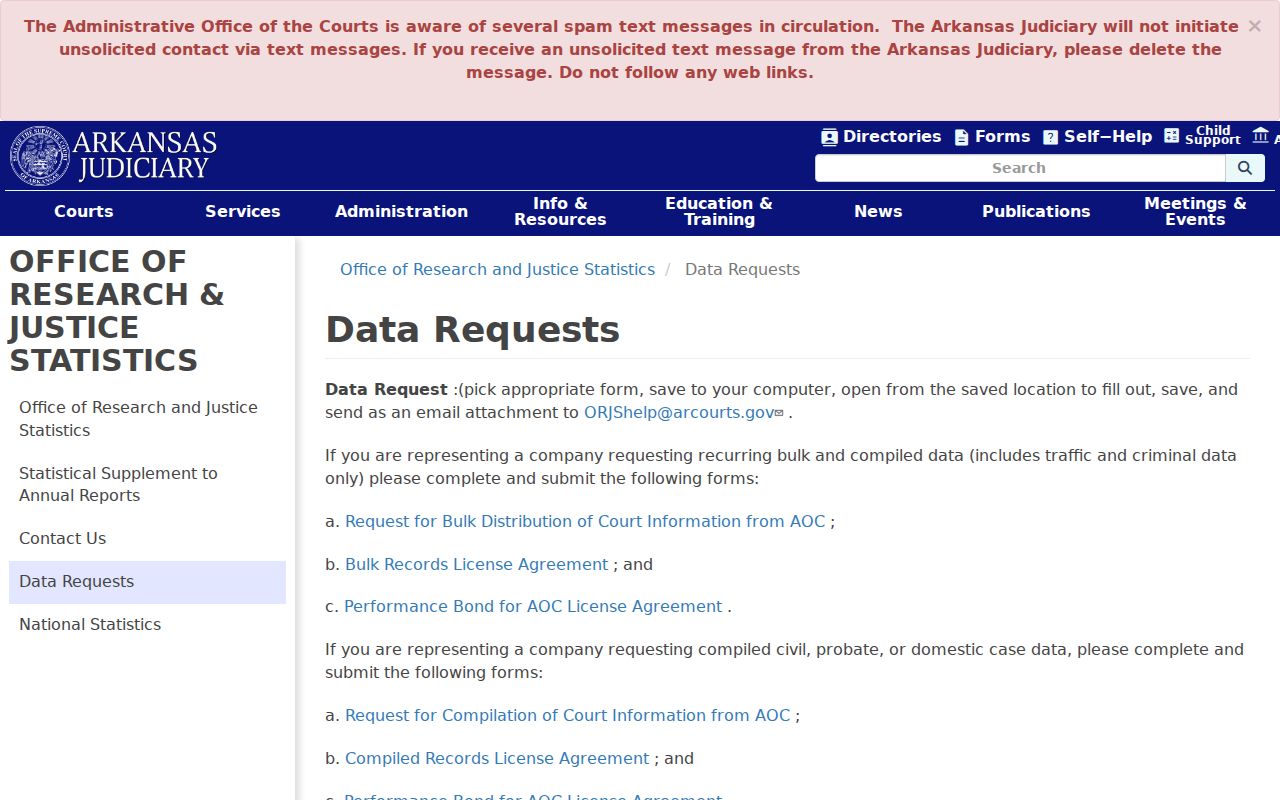
The image draws a line between a compiled-data request and a clerk copy order. One criminal case? Use Search ARCourts or the filing clerk. A well-scoped statistical request goes to the justice statistics office instead.
Dallas County Criminal Docket Confirmation
A setting looks wrong, or two dates both appear. That calls for a quick check. Reopen Case Summary and confirm the court location shown there. Review the newest future Case Event. Then scan later Docket Entries for a continuance, reset, cancellation, notice, or order. The final step is a direct call to the Circuit Clerk or the named District department, above all when the hearing is close. Use the public display to find the case, not to replace a filed notice. If the case will not come up, try different spellings and court filters before calling. Conditional District Court participation, an older local record, or restricted status can each affect what appears. The broader Dallas County case search walks through the portal's name and case-number paths. Note: The filing court is the source. That covers a current setting, an unlinked filing, and any certified Dallas County criminal record.
Public Access and Sealed Criminal Dockets
Administrative Order 19 is Arkansas's main authority on public access to court records. It grants access. That access is subject to federal law, state statutes, court rules, court orders, and listed confidential data. Personal identifiers can be redacted. A sealed document may show a placeholder. Or it may show no public link. A sealed or expunged case may not appear in public search at all.
Key rules:
Administrative Orders 19 and 19.1 govern public access, exclusions, redaction, and compiled court information.
Ark. Code Ann. §9-27-309 governs juvenile-record confidentiality, retention, and sealing.
Ark. Code Ann. §§16-90-1401 et seq. provides the criminal-record sealing framework.
A missing Dallas County criminal docket can have several causes: spelling, the wrong court, conditional District coverage, an older local file, confidentiality, or a court order. Guessing which one applies gets you nowhere. Ask the filing clerk what public material exists and what legal authority a restricted record would demand.